By Lindsay Angelo | Futurist, Growth Strategist, MBA & TED Speaker
Published: August 2026
Time to Read: 6 minutes
Editor's Note: Retail is changing faster than the traditional playbook can keep up. As a futurist, I look beyond tactics to understand the deeper forces reshaping how people discover, evaluate, and experience brands. These are the retail consumer trends I'm watching as we move toward 2027—and the opportunities they could create for business leaders and brands willing to bet beyond the transaction.
Key Takeaways
AI is moving from shopping assistant to shopping agent. As artificial intelligence becomes increasingly capable of researching, comparing, and eventually purchasing on consumers' behalf, retailers will need to rethink how brands get discovered.
The physical store isn't disappearing—it needs a new reason to exist. As transactions become easier to complete digitally, physical retail will increasingly compete on experience, expertise, discovery, and connection.
Wellness is expanding beyond a category into a retail operating system. The opportunity is no longer simply selling wellness products, but designing products, environments, and experiences around wellbeing.
The Worth-It Economy is changing what consumers value. Consumers aren't simply looking for lower prices. They're becoming more selective about what deserves their money, time, attention, and space.
The next generation of retail loyalty will be relational. Community, belonging, identity, and human connection can become increasingly powerful as AI makes products easier to compare.
Table of Contents
1.Rise of the Agentic Shopper
2.(Un)News Flash: The Store Isn't Dead. Its Job Is Changing.
3.Wellness as Retail OS
4.The Worth-It Economy
5.Community Becomes the New Loyalty
6.The Human Premium, She Wrote
7.Brands Built to Bend
What These Retail Consumer Trends Mean for Retailers
Retail has always been about more than selling things.
But for much of the digital era, the retail industry’s primary objective became reducing friction. Find the product faster. Compare prices more easily. Get it delivered sooner. Remove another step from checkout.
That model worked extraordinarily well.
Now we're entering a period where artificial intelligence can remove even more of that friction. AI can compare products, summarize reviews, recommend alternatives, find discounts, create shopping lists, and increasingly act on behalf of the consumer.
So what happens when convenience is no longer enough to differentiate?
That is the question I believe sits underneath the biggest retail consumer trends heading into 2027.
Consumers are becoming more selective about where they spend, while simultaneously expecting brands to deliver greater relevance, convenience, personalization, experience, and value. AI is changing discovery. Physical retail is being reinvented. Wellness is expanding into new categories. And consumers increasingly have to decide not only what to buy, but whether they want to buy at all.
The result is a retail landscape in which the transaction itself may become the least interesting part of the customer experience.
Here are seven retail consumer trends I believe retailers and consumer brands should be watching.
1. Rise of the Agentic Consumer
For decades, retail was built around the assumption that consumers would search for products themselves.
They would enter a query, browse a collection, compare options, read reviews, and eventually decide what to buy.
AI is beginning to collapse that journey.

We're moving from AI that helps consumers shop toward agentic AI that can increasingly shop on their behalf.
NIQ found in 2026 that 42% of consumers had used at least one AI tool to shop within the previous month, including 17% using AI for product recommendations. McKinsey has similarly found growing consumer use of generative AI for product and brand discovery.
This is more than another channel.
It represents a potential change in who—or what—sits between the consumer and the retailer.
The question for retailers is no longer simply, “How do we get consumers to our website?”
It's becoming: “How do we become the recommendation?”
Agentic AI can increasingly research products, compare options, interpret reviews, and narrow a consumer's choices. As these systems become more capable, they may eventually handle much of the transaction itself.
That creates an entirely new layer of competition.
Retailers have spent decades optimizing websites for humans and search engines. Now they need to consider how their products, positioning, pricing, reviews, inventory, and differentiation are interpreted by AI systems.
The rise of the agentic shopper also creates a paradox.
Consumers may have more personalized interactions than ever, while simultaneously having less direct interaction with the brands they buy from.
In 2026, retailers are seeing increasing AI-driven shopping traffic while working to preserve direct relationships with consumers and access to consumer data.
The retailer that wins in this environment won't necessarily be the one with the most sophisticated AI.
It will be the one that gives AI—and the consumer—the clearest reason to choose it.
AI could become the new storefront. But the relationship? It still belongs to the brand.
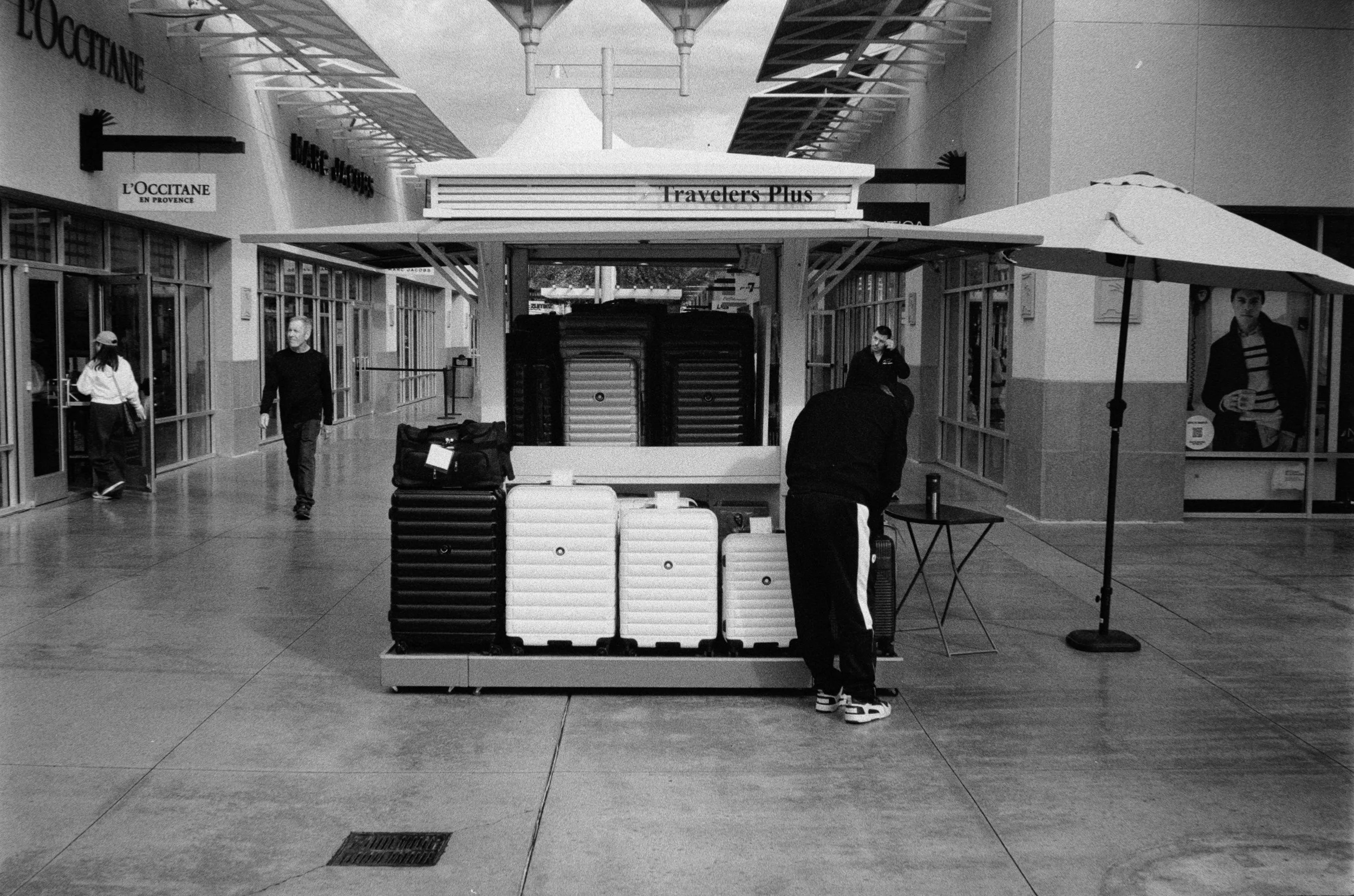
2. (Un)News Flash: The Store Isn't Dead. Its Job Is Changing.
Let's get the obvious prediction out of the way: physical retail isn't going away.
We've been saying this for more than a decade.
The experiential store. The flagship. The showroom. The community hub. Retail-as-entertainment. We've seen the predictions, the experiments, and plenty of retailers reinventing their physical spaces around experiences rather than transactions.
So that's not the interesting question anymore.
The interesting question is: What should a physical store do that an AI agent, marketplace, or delivery service can't?
Because the economics of the store are changing.
AI can increasingly help consumers decide what to buy before they ever walk through the door. E-commerce can deliver it to their homes. Automated checkout can remove the transaction. And increasingly sophisticated personalization can anticipate what they might want next.
So if the store's primary job is to facilitate a transaction, its competitive advantage has been disappearing for years.
Rather, its opportunity is elsewhere.
The physical store as a place for discovery, sensory experience, human expertise, community, and serendipity—things that are difficult to replicate through a screen or delegate to an AI assistant.
Stores will remain important but their roles are becoming more differentiated. While some will be optimized for convenience, others will be optimized for discovery, experience, or specific missions.
That means the future isn't necessarily about making every store more experiential.
It's about making every square foot earn its place.
A store might become a place where you try something you discovered through AI. A place where an expert helps you make a decision that an algorithm couldn't quite resolve. A place where you attend an event, meet people with shared interests, receive a service, or encounter something you weren't looking for at all.
That last one may be particularly important.
Digital commerce is exceptionally good at giving us more of what we already know we want.
Physical retail has the potential to introduce us to what we didn't know we wanted.
That's serendipity—and it may become a surprisingly valuable retail asset.
So yes, the store is becoming a destination.
But that's not new. The next question is what kind of destination—and whether consumers have a compelling reason to go there.
3. Wellness as Retail OS
Wellness is no longer simply a retail category. It's becoming a lens through which consumers evaluate their lives—and increasingly, the environments and brands they interact with.
McKinsey estimates that wellness represents more than $500 billion in annual U.S. consumer spending, with wellness increasingly expanding across categories and aspects of everyday life.
Retailers are responding. Major retailers have expanded their focus on wellness, reflecting the movement of wellness from an adjacent category toward a broader growth strategy.
But the more interesting opportunity isn't simply selling more wellness products. It's designing retail environments around wellbeing.
What if a store reduced sensory overload? What if shopping became restorative vs. exhausting? What if retail environments helped people discover products while creating opportunities for movement, connection, learning, or recovery?
This is where the Well-X economy comes into play.
The future of wellness isn't necessarily more supplements, trackers, or self-care products. It's the integration of wellbeing into the broader systems people interact with every day.
For retail, that could mean everything from wellness-focused product assortments to restorative store design, community programming, healthier food environments, sleep and recovery products, or services that help consumers feel better rather than simply buy more.
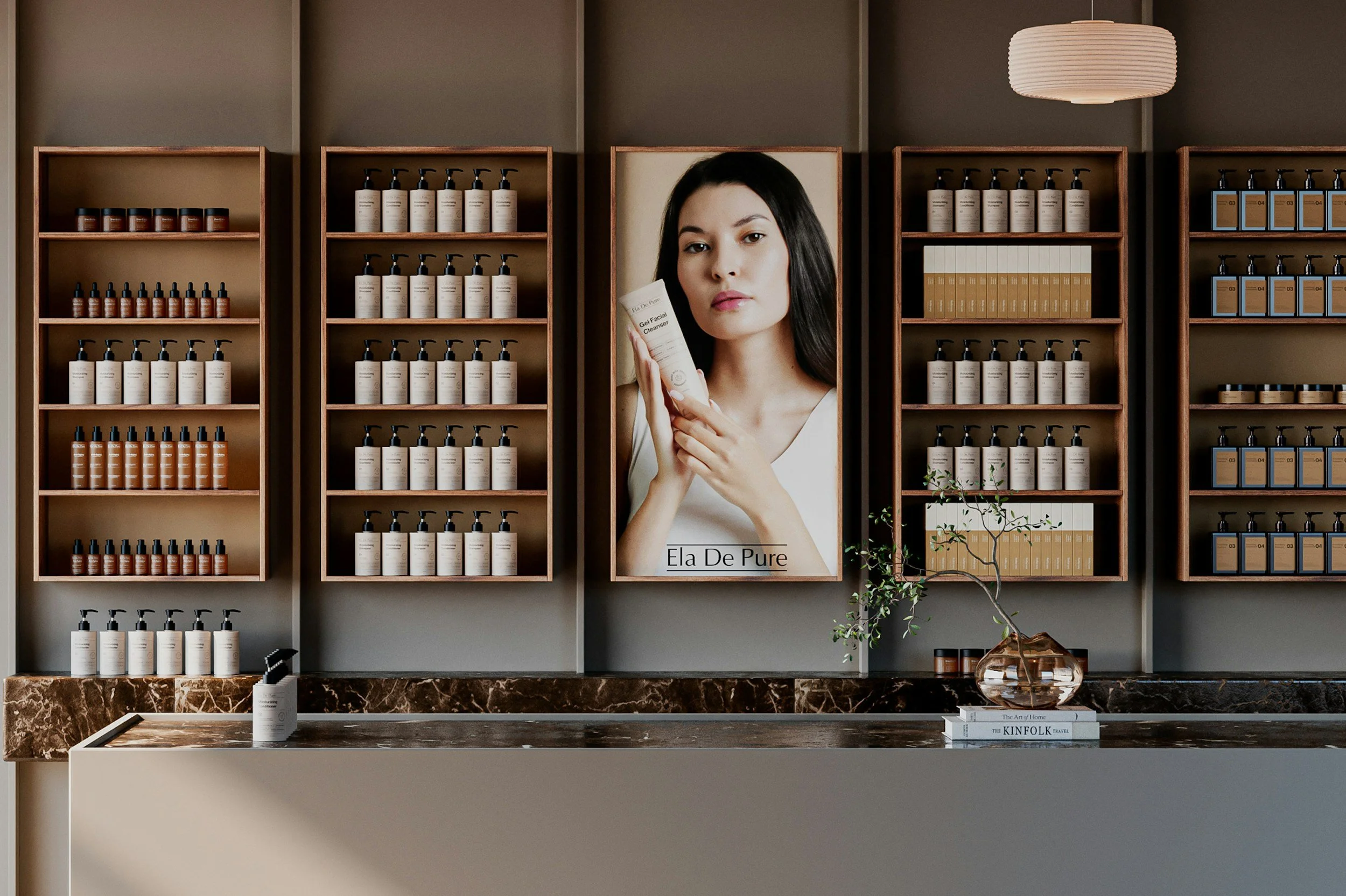
Disclaimer: LINDSAY ANGELO is not affiliated with, sponsored by, or endorsed by any company or brand. The brand image is used for illustrative purposes only.
The opportunity extends beyond traditional wellness retailers.
A fashion brand can design around confidence and identity.
A grocery retailer can design around nourishment and social connection.
A travel brand can design around restoration.
A technology company can design for healthier attention.
Wellness becomes less of a department and more of an operating system.
The retailers that understand this won't become “wellness retailers.”
They'll become retailers that understand what it means to elevate human lives.
4. The Worth-It Era
Price still matters. But “value” is becoming much more complicated.
Current economic pressure is making consumers more selective, with consumers looking for deals while still being willing to spend when something feels genuinely worth the premium.
That's an important distinction.
Consumers aren't necessarily looking for the cheapest option. They're asking whether something is worth it. That calculation can include price, but can also include convenience, durability, trust, aesthetics, emotional reward, identity, experience, and the amount of effort required to get what they want.
In other words, consumers aren't only spending money. They're spending attention, time, space, and mental energy. And those resources are increasingly scarce.
This creates an emerging Worth-It dynamic: an environment in which brands have to earn their place in people's lives rather than simply compete for their wallets.
That changes the orientation for retailers.
Instead of continually asking how to increase purchase frequency, retailers may need to ask a more difficult question: What makes this product or experience worth making room for?
Better service. Better curation. Better experiences. Better products. Better communities. Better convenience.
In a market where consumers can compare prices instantly, meaningful differentiation becomes the new form of pricing power.
5. Community Becomes the New Loyalty
Retail has traditionally thought about community as a marketing tactic. Create a loyalty program. Start a social channel. Host an event. Build an email list.
But the deeper opportunity is to think about community as part of the product itself.
The loneliness epidemic and growing social isolation are changing how people experience connection. At the same time, digital life can create extraordinary access while still leaving people feeling disconnected.
That creates an unusual opportunity for retail. A physical store can become a gathering place. A running brand can create a running community. A beauty retailer can create spaces for learning and connection. A bookstore can become a cultural hub. A specialty food retailer can create rituals around cooking and gathering.

These experiences aren't simply marketing.
They are emotional infrastructure.
And that can influence brand loyalty.
Consumers may be less loyal to a brand because they repeatedly buy the same product but more loyal because the brand has become part of their identity, relationships, routines, or community.
This is particularly important as AI makes product comparison easier.
If products are increasingly easy to compare, belonging becomes harder to commoditize.
That makes brand communities a powerful source of differentiation—and durable form of loyalty.
The future of retail will belong to the brands who care less about rewards and more about reasons to belong.
6. The Human Premium, She Wrote
AI is making information abundant. That means information itself becomes less differentiated.
A shopper can ask an AI assistant which vacuum cleaner to buy, which skincare ingredients are best for their needs, or which running shoe has the strongest reviews.
So what becomes valuable?
Human judgment, taste, expertise, and connection.
This is the Human Premium: the growing value of distinctly human qualities as AI becomes increasingly capable of replicating the informational parts of the shopping experience.
Retail is uniquely positioned to capitalize on this.
A knowledgeable salesperson can understand context that an algorithm may miss. A stylist can help someone see themselves differently. A beauty advisor can recognize hesitation. A store associate can make a recommendation based on years of experience rather than simply a pattern in consumer data.
That doesn't mean retailers should reject AI.
Quite the opposite. AI can handle the information-heavy work while humans focus on the relational work.
The future retail associate may therefore look less like a cashier and more like a guide, curator, advisor, host, or community builder.
That's a very different retail labor model. And potentially a much more valuable one.
As AI fatigue grows and digital noise intensifies, the human experience may become something consumers actively seek out rather than something brands need to automate away.
The irony is that the more technology retailers introduce, the more valuable the moments that technology can't create may become.
7. Brands Built to Bend
Retailers have historically relied on consistency.
The same logo. The same store. The same assortment. The same campaign. The same customer journey.
Consistency still matters.
But in a world where consumer behavior is fragmenting across AI assistants, social platforms, physical experiences, communities, apps, marketplaces, and emerging technologies, rigid brand structures may become increasingly difficult to sustain.
I believe we're moving toward modular brand systems.
Instead of thinking of a brand as one fixed expression, retailers can think of it as a flexible system with a strong core and adaptable components.
The core remains recognizable: purpose, values, distinctive point of view, visual identity, and customer promise.
The modules can change.
A community experience. An AI shopping assistant. A wellness offering. An immersive retail activation. A limited-edition collaboration. A creator partnership. An augmented reality experience. A physical store concept.
This allows brands to respond to emerging consumer behaviors without reinventing themselves every time something changes.
And that's increasingly important as the AI revolution accelerates the pace of consumer change, while demographic shifts and changing consumer sentiment create new expectations and new markets.
A brand that takes six months to approve and launch a new expression may find that the cultural moment has already moved on.
Brands built to bend can respond without breaking.
The strongest retail brands may therefore be those that know what should never change—and what should constantly evolve.
What These Retail Consumer Trends Mean for Retailers
The mistake retailers make with trends is treating them as a list of tactics.
AI is trending, so add an AI chatbot.
Wellness is growing, so launch a wellness collection.
Community matters, so start events.
Physical retail is changing, so redesign the store.
However, foresight means understanding the forces underneath the trend and asking what they mean for your business model.
Underneath these retail consumer trends, I see a much larger shift.
Retail is moving from transaction optimization to relationship design.
AI will make transactions increasingly frictionless. Consumers will be able to find products faster, compare options more easily, and automate more of the purchase journey.
That means the transaction itself becomes less defensible.
The opportunity is everything around it.
The experience. The expertise. The community. The identity. The trust. The sense of discovery. The feeling a consumer has when they interact with the brand.
This is why I believe the future of retail isn't simply omnichannel. It's omni-experiential.
The winning retailers won't just ask how consumers move between online and offline. They'll ask how every interaction can contribute to a larger relationship with the brand. In that sense, Omnichannel retailing becomes less about managing channels and more about creating a cohesive customer experience across them.
That may require new technology. But it may also require less technology.
It may require better data. But it will also require better judgment about when not to use it.
It may require personalization. But it will also require protecting consumers from feeling overly surveilled.
And it will require growth—but increasingly, growth that creates genuine value for the consumer rather than simply extracting more transactions.
The retail brands that thrive toward 2030 may therefore look very different from the retailers we know today.
They won't simply sell products.
They'll design ecosystems around how people want to live.
Ready to turn what's next into what's now? Explore our offerings above and at Futurkind.
Read more on the future of consumerism, importance of a retail futurist, and the future of the wellness industry.
About the Author
Lindsay Angelo is an award-winning Futurist, Growth Strategy Consultant, TED Speaker, and Founder of Futurkind™. Named one of the Top 30 Global Innovators and a Woman to Watch, she advises organizations on the future of consumer behavior, emerging technologies, strategic foresight, and innovation. Her work has helped more than 125 organizations—from Fortune 100 brands to founder-led businesses—anticipate change, identify new growth opportunities, and build businesses designed for what's next.

